What encouraged you to become a researcher?
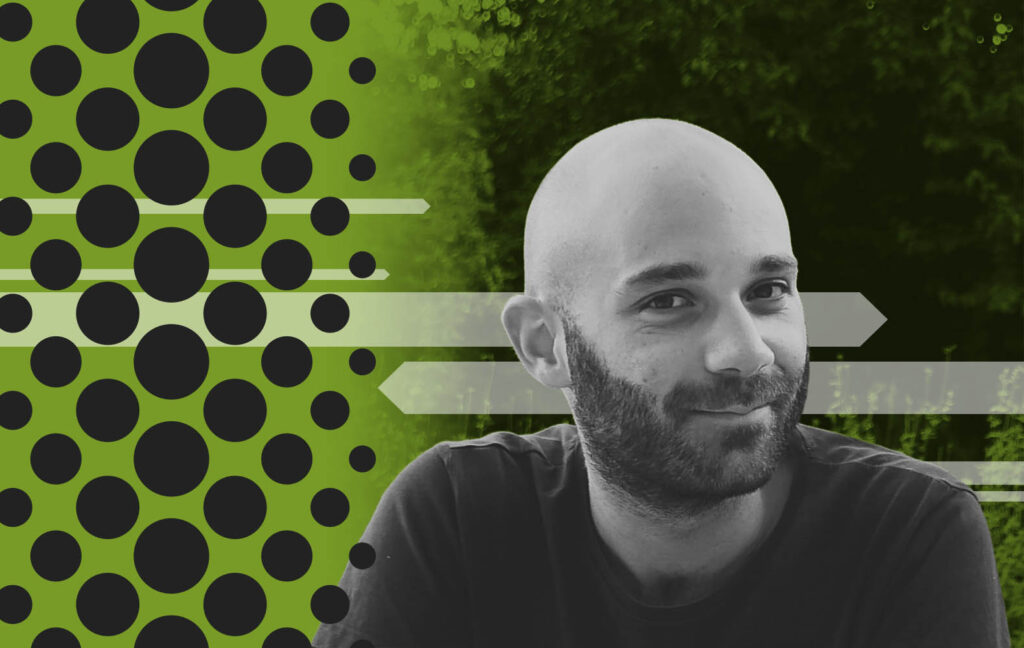
I started studying biology at university without having a clear vocation for research. But through my studies I did some internships in research labs, and I really liked the intellectual challenge of discovery. I was fascinated by life science and biology, and I did a PhD and became a researcher. My PhD lasted for five years in the Netherlands, then I worked as an assistant researcher in Berlin for more than four years.
I worked on how plants perceive and deal with environmental challenges, whether being attacked by bacteria, a small animal, elevated temperature or the UV light from the sunlight. There is something dangerous for them, and I studied how they answer: defend themselves or adapt.
This is connected to agriculture and improving food production, making crops more sustainable or more resistant – something I consider important. I remember a teacher of mine saying something really inspiring, that very few people study plants but more people will die because of food than because of cancer. So for me working on plants is no less relevant than doing medical research.
Why did you start writing about science?
I have been always interested in communicating my own research, and I found it very nice to explain to friends and family what I do in simple terms. I also liked science news and popularizing science programmes. I decided progressively, in addition to my work as a researcher, to do more projects of this kind. It is definitely another set of skills.
What hooked me about journalism was making the direct connection between science and what is happening in the world. Journalism has to be timely and related to something that is or has happened.
For me science communication or popularizing science was researching the answer to something and trying to explain it. In journalism, you give the opportunity to people to talk and explain – experts, researchers. That is where I learned the most, but it was also very challenging at the beginning because I was not used to interviewing people.
Was there a highlight from your fellowship?
I worked for the Belgium newspaper La Libre Belgique, and quite often wrote about diseases. I would look at what is happening in France or Germany, knowing that most likely it would come to Belgium a bit later. For instance, in the summer they found a pest in France, Italy and Germany that is very dangerous for crops. The Japanese scarab beetle (Popillia japonica) basically eats everything, and it is hard to protect against. There was suspicion of a case in Belgium, and I reported on it. I wrote about the insect, why is it so dangerous, what we can do to protect farms and fields, and what to do if you find this insect in Belgium.
I personally learned a lot from this! But there were other highlights, like going to the press conference of Omar M. Yaghi, who happened to be in Bruxelles the very day he learnt he won the Nobel Prize for Chemistry, or interviewing the British duo Bionic and the Wires who use plants to make music – two fields very dear to me.
There is something very positive about asking others their opinion. Also, as a journalist you deal with a lot of different topics, and it was very interesting to jump from one topic to the other one. Basically, I learned every day. But if I am honest, it is also sometimes a little frustrating not to dig into some topics as deeply as I would like to.
What is next for you as a journalist?
I now work as a freelancer, and recently La Libre Belgique contacted me again, and we are establishing a freelance project for a regular section in the newspaper related to science. It was just very easy and very nice to work with them. I learned a lot. I want to continue this way to try to have a more diverse portfolio across different journals.
But money is definitely not abundant in this field, so that is something quite worrying. I really like being a journalist, but deep inside I feel I am also a researcher. In the long run I would like to do a bit of both somehow: journalism and research in a think tank or NGO for instance.
How would you describe your experience with the fellowship?
It was great! Once I found La Libre Belgique as a host, things were actually very straightforward and very smooth. There was a bit of adaptation at the beginning, especially in terms of pace when you have just a few hours to write and publish. This I found very challenging – not the writing but contacting people and actually getting interviews or comments. But I learned.
The head of the science team was really happy to have someone with a different background because I came up with suggestions of articles and different ways of dealing with issues. I brought something very complementary to the team. This is what journalists can get from hosting fellows.