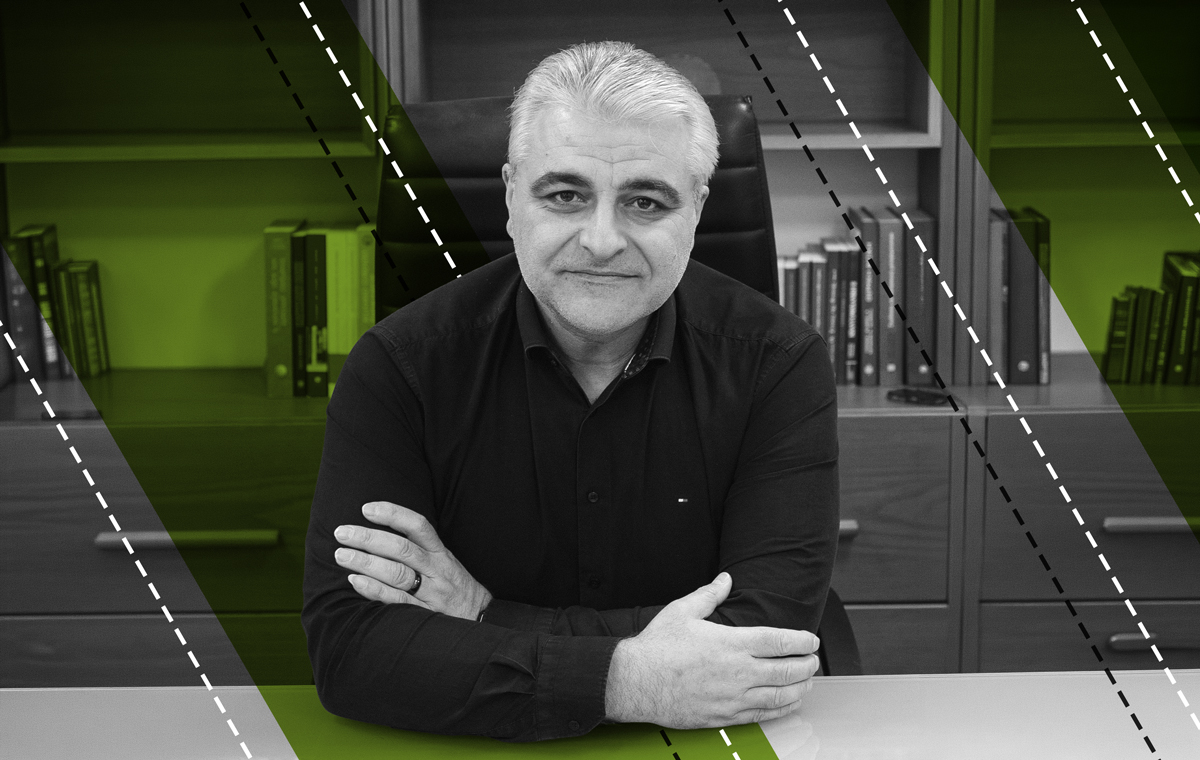
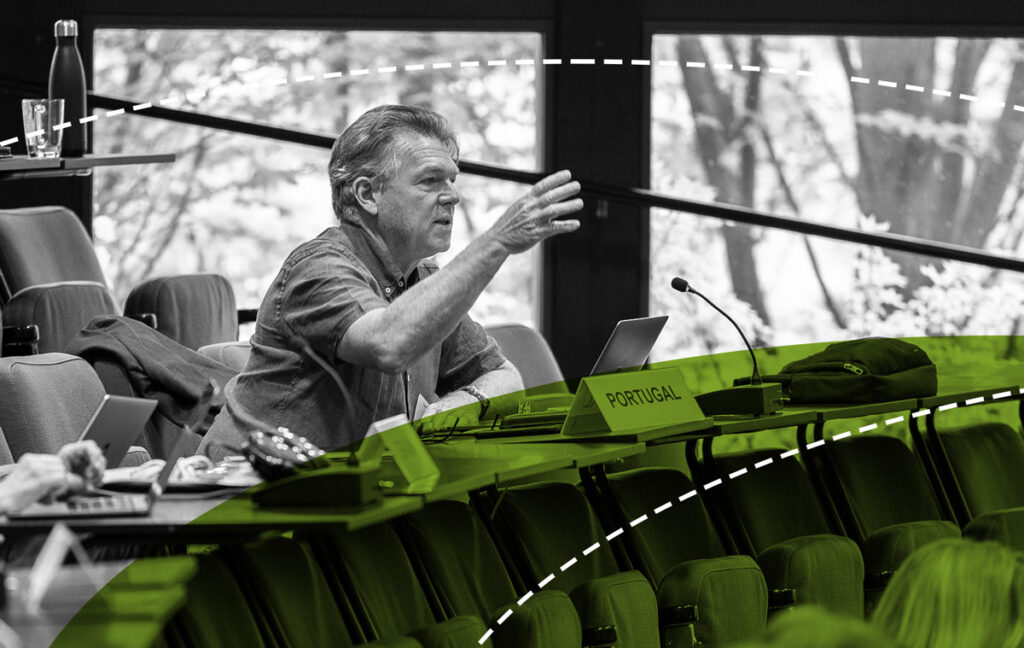
Claudio Sunkel from 2005 to 2023 was the Portuguese delegate to the EMBC, the governing body responsible for funding EMBO programmes. He reflects on the evolution of the life sciences in Portugal since the 1990s, the support EMBO has provided to generations of researchers in Portugal, and why collaboration and mentorship remain central to his work. Claudio Sunkel is Full Professor of Molecular Biology at the University of Porto’s Biomedical Institute (IBMC).
You have had a long association with EMBO. Why did you accept to represent Portugal at the EMBC?
Serving as Portugal’s delegate to the EMBC and the EMBL Council provided me with a broader perspective on how EMBO operates. I started regularly using EMBL databases around 1991-1992. Although I learned a little about EMBO at that time, it wasn’t until I was elected to full membership in 2000 that I became truly aware of EMBO and its offerings. I understood that EMBO is not just a funding body, but a scientific network that brings researchers together. However, it extends beyond Europe through global exchange programmes, and I saw firsthand how it doesn’t just respond to the current state of science. It shapes it, elevates sciences across and beyond EMBO Member States, and supports individuals at the most formative stages of their careers.
Would you say that EMBO is a “life sciences incubator”, in a certain way?
Entering one of the EMBO communities is a vote of confidence. It tells researchers that their ideas are worth investing in. One significant contribution that often goes unnoticed when compared to the EMBO Fellowships Programmes or the Young Investigator Network is how EMBO Courses and Workshops bring people together. These events provide researchers with exposure to cutting-edge techniques, but more importantly, they foster a sense of community. Some of my students still talk about the connections they made at those workshops.
You have supervised more than 25 PhD students during your career and over 20 postdoctoral fellows. Can you share more about the EMBO impact in your lab?
One of the most memorable experiences was when Eurico Morais-de-Sa, now a principal investigator at i3S, the Institute for Research and Innovation in Health affiliated to the University of Porto, approached me with a project back in 2011. He was studying tissue polarity and how epithelial cells maintain their structure and polarity during division. That was not my area of research at the time as I had been working for several years on chromosome segregation and genome stability. But we saw the opportunity to do something new. How do cells in a single-cell-layer epithelium divide and at the same time maintain integrity? He applied for funding from the EMBO Postdoctoral Fellowship Programme and that support allowed for the collaboration to take off. Eurico led a fantastic postdoctoral work in my lab. We published numerous papers together, and we’ve had an ongoing partnership ever since.
Portugal joined the European Union in 1986 and the EMBC in 1994; its life sciences landscape has undergone significant changes since then. How has this transformation looked from your perspective?
Portugal has undergone numerous in-depth developments since joining the EU in 1986, whether at the societal, economic, or scientific level. Many in-depth developments have occurred it comes to life sciences; the changes have been significant. Before 1994, Portugal had limited life sciences PhD programmes, a low visibility at the international scale and minimal research infrastructures. After Portugal joined the EU and eventually EMBC, funding for mobility and training opportunities became more widely available. Emerging scientists travelled abroad, thanks to the EMBO Fellowships Programme and other European funding schemes, to learn new skills and make science move forward. Portuguese institutions have also developed programmes in both Portuguese and English that have attracted members of the Portuguese diaspora, allowing a generation of scientists who received higher education in other countries to conduct PhDs and postdoctoral work in Portugal and help raise the national level of science. I like to say that Portugal’s presence in life sciences didn’t grow just by building labs, it grew by building people.
What do you think is most important for small or mid-sized countries to focus on in terms of scientific development?
The Portuguese story is an example that has proven very valuable to us, and, as I just mentioned, it invested in people, not just infrastructure. Training and mentoring matter more than buildings. And stay connected internationally. One of the reasons EMBO is so effective is that it creates a sense of belonging to a broader research community. That matters hugely for scientists in smaller countries. It provides them with access, visibility, and standards of excellence to aim for.
What continues to excite you in research today?
Curiosity, always. I remain fascinated by all aspects of the biological sciences, especially mitosis and how cells regulate cell division, including its control, particularly in a real tissue context. This includes how spindle orientation is influenced by polarity, mechanics, and checkpoints that impact genomic stability. And, most importantly, working with younger scientists whose fresh questions push me to rethink what I thought I knew is an essential aspect of my work.